
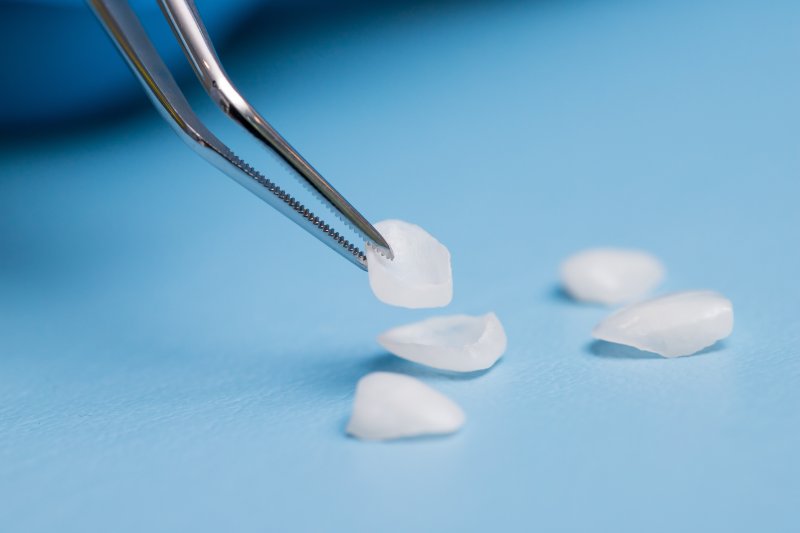
If you’re thinking about veneers, you may not know that you have options. While many dentists only offer traditional versions, others provide “no-prep” veneers, which may fit better into your treatment plan or align with your goals. Both options can create a brighter, more even smile, but they aren’t the same. Understanding the differences can help you feel more confident when you talk with your dentist. Here’s a simple breakdown of how these two veneer types compare.
How Traditional Veneers Work
Traditional veneers are shells of porcelain—usually about the width of a mechanical pencil lead—that cover the front surfaces of your teeth. To make room for them, your dentist will need to remove a small amount of enamel from the front and sides of each tooth. This helps the enhancements fit naturally and prevents your teeth from looking bulky.
After your teeth are prepared, impressions are taken and sent to a dental lab. Then, you’ll typically be given temporary shells to wear while your final ones are made. Once they’re ready, your dentist bonds them in place over each individual tooth. Traditional veneers are strong, long-lasting, and perfect for changing several aspects of your smile.
What Are No-prep Veneers?
No-prep veneers are also made with thin porcelain. However, while traditional enhancements are around 0.8 millimeters in thickness, no-prep versions are the width of a contact lens. This allows them to be placed with minimal or sometimes no enamel removal at all!
This approach can make the process both faster and more conservative for your teeth. In some cases, you may not even need numbing or temporaries. However, no-prep veneers aren’t right for everyone. They usually work best for patients whose teeth are small, slightly spaced, or gently set back already.
Which Should You Choose?
If you’re wondering which veneer type to choose, here are some of the key differences to consider:
- Tooth Preparation: Traditional veneers usually require more reshaping of the tooth. No-prep veneers involve little to no instruments.
- Reversibility: Once enamel is removed for traditional veneers, the process is irreversible. No-prep versions can be removed and reapplied as necessary without affecting your teeth.
- Thickness and Appearance: Traditional enhancements can hide dark discoloration and larger flaws. No-prep shells are thinner and may not cover severe staining or chips as well.
- Candidacy: Not everyone is a candidate for no-prep veneers. Crowded, large, or very dark teeth may need traditional ones for the best results.
Both no-prep and traditional veneers can create beautiful, natural-looking smiles. So, the best choice depends on your unique situation and cosmetic goals. With the right type of enhancements and a personalized treatment plan, you can enjoy a brighter, more confident smile for many years.
About the Practice
At Southwest Dental, Dr. Ranjbaran and Dr. Johnson provide personalized, high-quality care to help every patient feel confident in their smile. Whether you want traditional or no-prep veneers or another cosmetic service, they take time to explore all your options. Call (505) 896-9399 to schedule a no-prep veneers consultation with our friendly team or visit our website to learn more.